
Originally Posted On: https://www.ucanpack.com/blog/post/the-case-for-upgrading-your-cardboard-shipping-boxes-before-your-next-holiday-rush
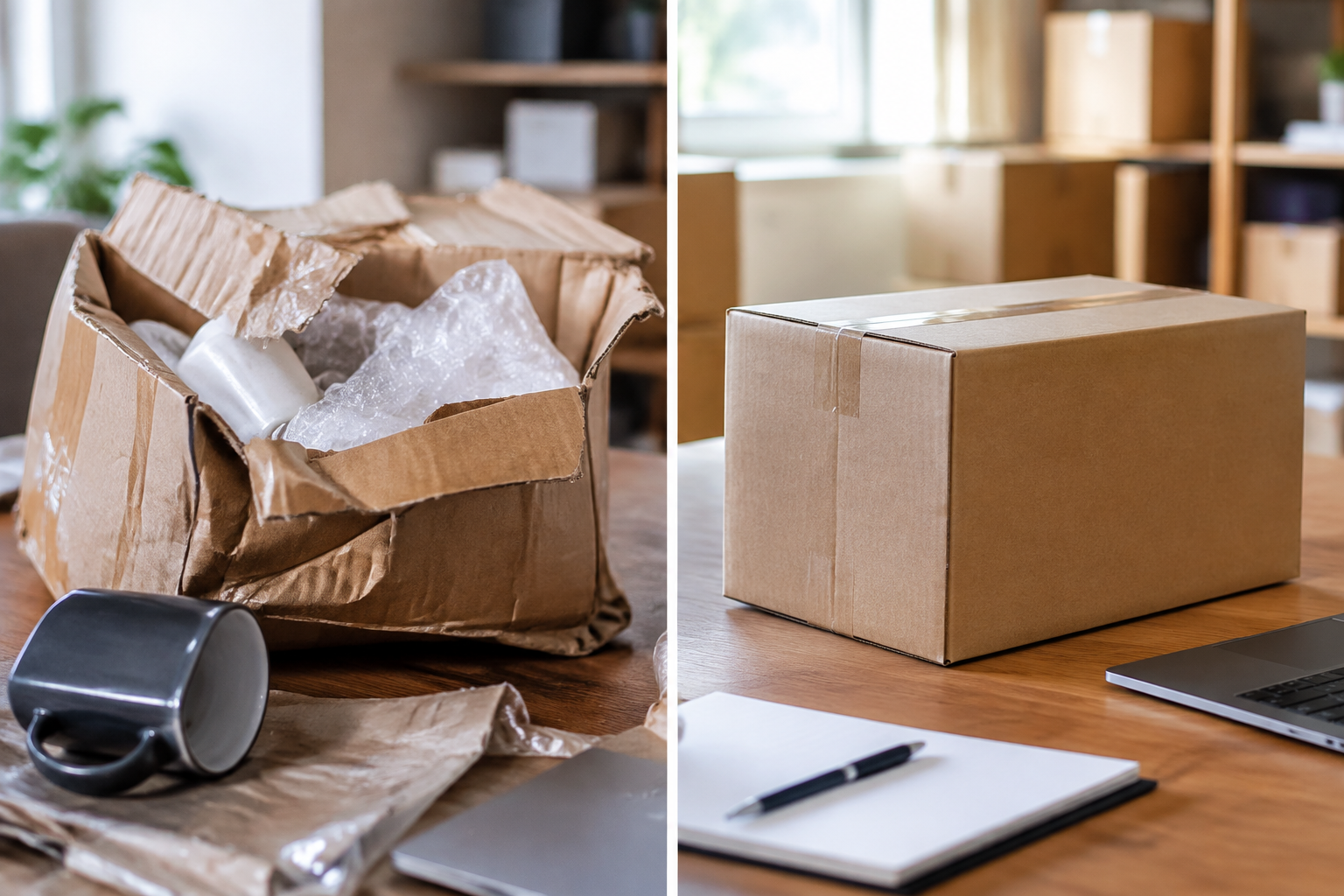
The Bottom Line
Stop buying single boxes at the home-improvement or big-box store. Switch to wholesale corrugated cardboard shipping boxes in 2-3 right-sized dimensions before the holiday rush, and you'll pay less per box and see fewer crushed parcels.
One damage claim can erase a season of savings from cheap boxes. Test free samples with your real product, pick the wall construction and ECT rating that fits its weight, then lock in stock 4-6 weeks before peak.
One crushed carton in December can erase the margin on thirty good orders. Dale Whitfield has watched it happen for 22 years, from the plant floor to the loading dock.
Most small sellers start the same way.
They grab cardboard shipping boxes from a home-improvement aisle or a big-box shelf, pay for singles, and call it good enough. It works at 50 orders a month. Then volume climbs, the holiday rush hits, and those flimsy retail boxes start folding at the corners (usually in a carrier's sorting hub, where nobody's watching).
Here's the thing. Wholesale corrugated isn't just for warehouses and giant brands anymore. Bundles start small, samples are free, and the right wall construction costs less than a single replacement order plus the angry review that follows. So why are so many sellers still buying one box at a time?
Because nobody showed them the other option. Peak season is the cheapest moment to fix it, and the window is closing.
Why Retail-Store Boxes Are Costing You More Than Wholesale Cardboard Shipping Boxes
A seller shipping 400 orders a month runs out of 12x9x6 boxes on a Tuesday. She drives to the home store, grabs ten singles, and pays a premium for each. Two weeks later, three of those orders come back crushed. Sound familiar?
The thesis: switching to wholesale corrugated boxes before peak season cuts per-unit spend and damage claims
Here's the position, plain and simple.
Moving to bulk cardboard shipping boxes before your holiday surge lowers what you pay per box and lowers what you pay in replacements. Both numbers drop together. That's rare in packaging.
Retail singles are priced for convenience, not for repeat shippers. Wholesale bundles of 25 or more flip that math.
What a 22-year box-plant view shows about home-store and big-box singles vs. bulk bundles
After 22 years on plant floors, Dale Whitfield sees the same pattern. Retail boxes are often light single-wall with a low ECT rating, built for a moving day, not a parcel network. Nobody prints the strength on the flap, so you're guessing.
Bulk buying fixes the guessing. A good shipping supplier lists the flute and ECT rating up front, so you match the box to the product weight.
-
Singles: unknown strength, mixed sizes, emergency runs.
-
Bundles: consistent corrugated grade, matched sizes, fewer surprises.
Selling soft goods or gifts? Consider shipping mailer boxes for the lighter orders and keep RSC cartons for heavy-duty items.
The counterargument is cash flow, and it's fair. But one damage claim erases the savings from a dozen cheap singles.
Flute, ECT Rating, and Wall Construction: What Actually Keeps Products Alive
Single-wall vs. double-wall corrugated for heavy-duty orders (with real failure examples)
Single-wall boxes crush. Not always, but often enough to matter. A 28-pound cast-iron cookware set shipped in a single-wall carton will bow at the bottom seam by the second sorting hub. Dale Whitfield saw this pattern for 22 years on plant floors. Anything over 40 pounds, or any load that stacks under other parcels, belongs in double-wall. Bike parts, tool kits, and long shipping boxes for rods or trim all fall into that group.
Reading the ECT stamp: 32 ECT vs. 44 ECT and when sturdy means double wall
Check the stamp on the bottom flap. It's a small circle with a number. That number is the Edge Crush Test rating, in pounds per inch of edge.
-
32 ECT: fine for light goods under about 20 pounds.
-
44 ECT: better for 20 to 65 pounds, usually double-wall.
Switching from 32 to 44 ECT costs a few cents a box. One damage claim wipes that out. So which would you rather pay for?
Why B-flute, C-flute, and E-flute each fit different products
B-flute is thin and crush-resistant. It suits canned goods and printed retail packs. C-flute is the all-round pick for stacking strength, and it's what most cardboard shipping boxes use. E-flute is the slimmest, built for small, light items that need crisp graphics.
Temperature-sensitive goods are a different problem, since insulated shipping boxes handle heat and cold that plain corrugated can't. For wholesale orders in any of these builds, UCANPACK lists flute and ECT specs right on each product page.
The Hidden Math of Oversizing and Right-Sizing Small and Large Shipping Boxes
Measuring products and picking 2-3 sizes (8x8x8 up to 24x24x24) instead of stocking twenty
Why does a 6-inch candle jar ride in a box built for a toaster? Because the seller grabbed whatever was on the shelf. Dale Whitfield, a corrugated engineer with 22 years in box plants, sees it constantly. Oversized cardboard shipping boxes mean more filler, more postage, and more crushed corners when the void collapses.
The fix is simple.
Measure length, width, and height on your top ten sellers. Add one to two inches per side for cushioning. Then sort them into buckets.
-
Small: 8x8x8 for jewelry, candles, accessories
-
Medium: roughly 12x12x12 for apparel bundles and mid-size goods
-
Large: up to 24x24x24 for bulky or multi-item orders
Three sizes cover most small shops. Stocking twenty just ties up garage space. For lightweight goods that ship alone, mailer shipping boxes in a snug fit also skip the tape and cut pack time.
How dimensional weight at USPS and other carriers punishes extra air
Carriers don't bill only for weight.
They bill for the space a box takes up on the truck. That's dimensional weight, and USPS applies it to larger parcels, with other carriers using similar formulas.
Here's what that means in practice. A 5-pound item in a 24x24x24 box gets billed as if it weighed far more. Same product, a tighter box, a lower rate. Brutal, but fixable.
For heavier goods, don't shrink the box and skimp on strength. Pair the right size with crush resistant shipping boxes so a tighter fit doesn't turn into a damage claim.
The Strongest Counterargument: "I Only Ship 50-1,000 Orders a Month, So Buying Bulk Isn't Worth It"
Retail-store boxes can run three to five times the per-unit rate of wholesale, and small sellers pay it every week. That's the quiet drain behind the objection. Fair point, though: nobody wants a garage full of cartons and a drained bank account.
Cash flow, storage space, and low minimums: why 25-unit bundles and free samples change the equation
The old picture of wholesale, with 5,000-unit minimums and pallets blocking the car, is outdated. Bundles now start at 25 units. Free samples let you test fit with real product before spending anything.
-
Cash flow: order 100-500 boxes, not 5,000.
-
Storage: flat-shipped bundles of corrugated stack on one shelf.
-
Risk: test two or three sizes, then reorder the winners.
Stocking shipping supplies online in one order also kills the emergency run to the big-box store.
Rebuttal: one damage claim wipes out a season of savings from cheap boxes
Here's the math most sellers skip. Save 30 cents a box across 500 orders, and you've pocketed $150. One crushed order costs a replacement, return postage, and probably a customer. Done. That savings is gone.
Thin single-wall cartons fail fast under holiday handling. Anything dense needs a sturdier build, and shipping boxes for heavy products should carry a higher ECT rating or double-wall construction. So is bulk worth it at your volume? Yes. Cheap cardboard shipping boxes are the expensive choice.
Where to Buy Cardboard Shipping Boxes Now: A Pre-Rush Action Plan
Free boxes aren't free. That's the myth that burns small sellers every November. A used liquor-store carton has lost a big chunk of its stacking strength, and carriers don't care where it came from. Dale Whitfield, a 22-year corrugated engineer, has seen the results: crushed corners, split seams, refunds.
Free boxes, cheap boxes, and near-me options vs. ordering wholesale online: what each really delivers
Here's what each source gives you in practice:
-
Free boxes: Grocery and liquor stores hand them out, and USPS offers free Priority Mail boxes only for Priority shipments. Sizes are random, and the strength is unknown.
-
Big-box and office stores: Home Depot, Walmart, and Office Depot sell single boxes near you today. Convenient, but the per-unit rate runs 3-5x higher than wholesale.
-
Wholesale online: Bulk bundles of 25-100, known ECT ratings, and consistent sizes from 8x8x8 up to 24x24x24.
Anything you ship beyond 30 lbs needs real engineering.
Sturdy shipping boxes for heavy items use double-wall construction, not a thin single wall.
Order samples, test with real product, and lock in stock 4-6 weeks before the holiday rush
-
Request free samples of two or three sizes.
-
Pack actual product and drop it from waist height onto each corner.
-
Add cardboard shipping sheets as dividers if anything shifts.
-
Place your bulk order while stock is deep.
Wait until mid-November, and you're paying rush rates for whatever's left. Why gamble on that?
Peak season doesn't forgive weak links. A box that holds up in July can fold in December, when parcels get stacked higher, tossed harder, and sit longer in trucks. Sellers who upgrade now rarely regret it. Those who wait usually learn the lesson through a pile of damage claims.
The fix isn't complicated. Match the wall construction — ECT rating to the heaviest thing you ship, then trim your lineup to two or three sizes that fit snugly. Less air in the box means lower carrier charges and fewer crushed corners. Wholesale bundles, even small ones, beat buying singles off a store shelf every time.
Skeptics will say a shop at this volume can't justify bulk buying. The numbers disagree. Low-minimum bundles and free samples take most of the risk out of the decision.
So here's the next step. This week, measure your five best-selling products, request samples of cardboard shipping boxes in the sizes that fit them, and drop-test each one with real product inside. Place your order 4-6 weeks before the rush begins. Then let the boxes prove themselves.
UCANPACK
753A Tucker Rd
Winder, GA 30680
1 201-975-6272
https://ucanpack.com


