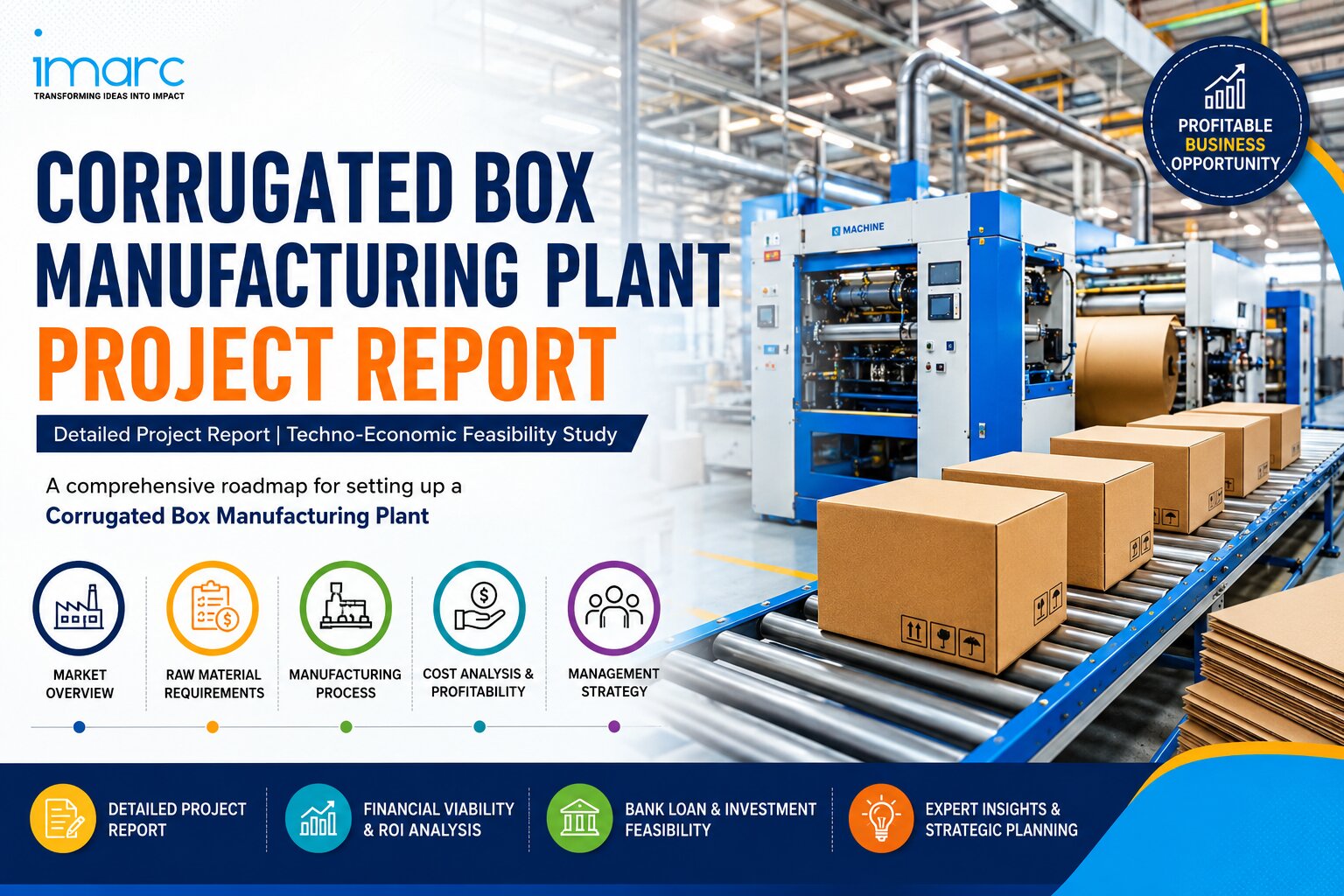
A Detailed DPR Covering CapEx, OpEx, Process, ROI & the Global Opportunity in E-Commerce, Food & Beverage, Pharmaceutical and Industrial Corrugated Packaging
BROOKLYN, NY, UNITED STATES, May 19, 2026 /EINPresswire.com/ — Setting up a corrugated box manufacturing plant puts you at the centre of the most universal packaging format in the world. Every physical product that moves through a supply chain - from an Amazon parcel to a pharmaceutical shipment to a crate of mangoes going to export - needs a corrugated box. Demand is structurally diversified across dozens of end-use industries, which means no single customer segment controls your revenue. The e-commerce explosion, sustainability-driven shift away from plastics, and India’s manufacturing expansion are all accelerating demand simultaneously, making corrugated packaging plant setup one of the most stable and scalable manufacturing investments available today.
IMARC Group’s Corrugated Box Manufacturing Plant Project Report is a complete DPR and corrugated box manufacturing feasibility study for entrepreneurs, investors, and project developers. It covers the full corrugated board manufacturing plant setup - from raw paper feeding through corrugating, lamination, slitting, printing, die-cutting, and dispatch - with complete corrugated box plant CapEx and OpEx modelling and 10-year financial projections.
𝐑𝐞𝐪𝐮𝐞𝐬𝐭 𝐟𝐨𝐫 𝐚 𝐒𝐚𝐦𝐩𝐥𝐞 𝐑𝐞𝐩𝐨𝐫𝐭: https://www.imarcgroup.com/corrugated-box-manufacturing-plant-project-report/requestsample
𝐈𝐧𝐯𝐞𝐬𝐭𝐦𝐞𝐧𝐭 𝐃𝐫𝐢𝐯𝐞𝐫𝐬 𝐚𝐧𝐝 𝐌𝐚𝐫𝐤𝐞𝐭 𝐎𝐩𝐩𝐨𝐫𝐭𝐮𝐧𝐢𝐭𝐲
Three forces are driving consistent demand growth for corrugated box manufacturing:
𝐄-𝐜𝐨𝐦𝐦𝐞𝐫𝐜𝐞 𝐜𝐫𝐞𝐚𝐭𝐢𝐧𝐠 𝐩𝐞𝐫𝐦𝐚𝐧𝐞𝐧𝐭 𝐩𝐚𝐜𝐤𝐚𝐠𝐢𝐧𝐠 𝐯𝐨𝐥𝐮𝐦𝐞: Every order placed online generates a corrugated box. India’s e-commerce sector, growing at double-digit rates, is adding new fulfilment centres and dark stores across tier-2 and tier-3 cities - every one of which is a sustained buyer of corrugated packaging. Quick-commerce platforms require specialised E-flute and die-cut formats at scale, creating demand for manufacturers who can deliver consistent quality at speed.
𝐒𝐮𝐬𝐭𝐚𝐢𝐧𝐚𝐛𝐢𝐥𝐢𝐭𝐲 𝐫𝐞𝐠𝐮𝐥𝐚𝐭𝐢𝐨𝐧𝐬 𝐦𝐚𝐤𝐢𝐧𝐠 𝐜𝐨𝐫𝐫𝐮𝐠𝐚𝐭𝐞𝐝 𝐭𝐡𝐞 𝐝𝐞𝐟𝐚𝐮𝐥𝐭: Corrugated boxes achieve a 90%+ recycling rate - among the highest of any packaging material globally. Single-use plastic bans, Extended Producer Responsibility norms, and corporate ESG commitments are all pushing brand owners to replace plastic-dominant packaging with corrugated alternatives. This is a regulatory tailwind with no reversal date - every new plastic ban enacted anywhere in the world creates a permanent new buyer base for corrugated box manufacturers.
𝐅𝐨𝐨𝐝, 𝐩𝐡𝐚𝐫𝐦𝐚, 𝐚𝐧𝐝 𝐅𝐌𝐂𝐆 𝐩𝐫𝐨𝐯𝐢𝐝𝐢𝐧𝐠 𝐬𝐭𝐚𝐛𝐥𝐞 𝐛𝐚𝐬𝐞𝐥𝐨𝐚𝐝 𝐝𝐞𝐦𝐚𝐧𝐝: Unlike e-commerce which is seasonal, food and beverage, pharmaceuticals, and FMCG generate year-round corrugated box consumption. Fresh produce, processed food, beverages, medicines, and consumer goods all move in corrugated. An e-commerce corrugated box plant diversified across food, pharma, and FMCG customers achieves significantly more stable capacity utilisation than a single-sector operation.
𝐂𝐨𝐫𝐫𝐮𝐠𝐚𝐭𝐞𝐝 𝐁𝐨𝐱 𝐓𝐲𝐩𝐞𝐬 𝐚𝐧𝐝 𝐏𝐫𝐨𝐝𝐮𝐜𝐭 𝐑𝐚𝐧𝐠𝐞
A corrugated box production plant’s product range is defined by flute type, wall construction, and box style:
• 𝐒𝐢𝐧𝐠𝐥𝐞 𝐰𝐚𝐥𝐥 (3-𝐩𝐥𝐲) 𝐜𝐨𝐫𝐫𝐮𝐠𝐚𝐭𝐞𝐝 𝐛𝐨𝐱𝐞𝐬: One corrugated medium between two flat liners. The most widely produced format. Used for consumer goods, FMCG, food, and standard e-commerce shipments. Flute types B and C dominate this segment.
• 𝐃𝐨𝐮𝐛𝐥𝐞 𝐰𝐚𝐥𝐥 (5-𝐩𝐥𝐲) 𝐜𝐨𝐫𝐫𝐮𝐠𝐚𝐭𝐞𝐝 𝐛𝐨𝐱𝐞𝐬: Two corrugated medium layers for greater stacking strength. Used for heavy goods, automotive parts, industrial components, and export packaging requiring extended transit strength.
• 𝐓𝐫𝐢𝐩𝐥𝐞 𝐰𝐚𝐥𝐥 (7-𝐩𝐥𝐲) 𝐜𝐨𝐫𝐫𝐮𝐠𝐚𝐭𝐞𝐝 𝐛𝐨𝐱𝐞𝐬: Three corrugated medium layers. Used as pallet boxes and bulk containers for agricultural produce, chemicals, and heavy industrial goods. Replaces wooden crates in many applications.
• 𝐃𝐢𝐞-𝐜𝐮𝐭 𝐜𝐮𝐬𝐭𝐨𝐦 𝐛𝐨𝐱𝐞𝐬: Cut to precise shapes for product-specific fit. Used heavily in e-commerce direct-to-consumer packaging, display packaging, and premium retail. Growing fastest due to brand-driven unboxing experience demand and digital die-cutter adoption.
• 𝐊𝐫𝐚𝐟𝐭 𝐩𝐚𝐩𝐞𝐫 𝐜𝐨𝐫𝐫𝐮𝐠𝐚𝐭𝐞𝐝 𝐛𝐨𝐱 𝐦𝐚𝐧𝐮𝐟𝐚𝐜𝐭𝐮𝐫𝐢𝐧𝐠: Virgin kraft linerboard corrugated boxes for export-grade food, pharmaceutical, and electronics packaging requiring burst strength and moisture resistance beyond what recycled fibre delivers.
𝐂𝐨𝐫𝐫𝐮𝐠𝐚𝐭𝐞𝐝 𝐁𝐨𝐱 𝐌𝐚𝐧𝐮𝐟𝐚𝐜𝐭𝐮𝐫𝐢𝐧𝐠 𝐏𝐥𝐚𝐧𝐭 𝐅𝐞𝐚𝐬𝐢𝐛𝐢𝐥𝐢𝐭𝐲 𝐑𝐞𝐩𝐨𝐫𝐭 → https://www.imarcgroup.com/corrugated-box-manufacturing-plant-project-report
𝐇𝐨𝐰 𝐚 𝐂𝐨𝐫𝐫𝐮𝐠𝐚𝐭𝐞𝐝 𝐁𝐨𝐱 𝐌𝐚𝐧𝐮𝐟𝐚𝐜𝐭𝐮𝐫𝐢𝐧𝐠 𝐏𝐥𝐚𝐧𝐭 𝐖𝐨𝐫𝐤𝐬 - 𝐓𝐡𝐞 𝐂𝐨𝐫𝐫𝐮𝐠𝐚𝐭𝐢𝐧𝐠 𝐚𝐧𝐝 𝐂𝐨𝐧𝐯𝐞𝐫𝐭𝐢𝐧𝐠 𝐏𝐫𝐨𝐜𝐞𝐬𝐬
A corrugated box plant operates in two stages: corrugating (making the board) and converting (cutting and printing it into boxes):
• 𝐏𝐚𝐩𝐞𝐫 𝐫𝐨𝐥𝐥 𝐟𝐞𝐞𝐝𝐢𝐧𝐠: Liner rolls (top and bottom flat layers) and fluting medium rolls are loaded onto the corrugator. Paper weight and moisture content are checked before feeding. Kraft paper and recycled linerboard are the two main liner options
• 𝐅𝐥𝐮𝐭𝐢𝐧𝐠 𝐚𝐧𝐝 𝐜𝐨𝐫𝐫𝐮𝐠𝐚𝐭𝐢𝐧𝐠: The fluting medium passes through heated corrugating rolls that form the characteristic wavy structure. Flute size - A, B, C, E, or F - determines the cushioning and stacking characteristics of the finished board
• 𝐆𝐥𝐮𝐢𝐧𝐠 𝐚𝐧𝐝 𝐬𝐢𝐧𝐠𝐥𝐞-𝐟𝐚𝐜𝐞 𝐥𝐚𝐦𝐢𝐧𝐚𝐭𝐢𝐨𝐧: Starch-based adhesive is applied to the flute tips and the first liner is bonded to the corrugated medium under heat and pressure, forming single-face board
• 𝐃𝐨𝐮𝐛𝐥𝐞 𝐛𝐚𝐜𝐤 𝐥𝐚𝐦𝐢𝐧𝐚𝐭𝐢𝐨𝐧: The second flat liner is glued to the open side of the corrugated medium, completing the three-layer (or five or seven-layer for multi-wall) corrugated board
• 𝐒𝐥𝐢𝐭𝐭𝐢𝐧𝐠 𝐚𝐧𝐝 𝐬𝐜𝐨𝐫𝐢𝐧𝐠: The continuous board web is slit to the required width and scored at fold lines. Precision scoring is critical - under-scoring causes box failures; over-scoring weakens the board
• 𝐅𝐥𝐞𝐱𝐨𝐠𝐫𝐚𝐩𝐡𝐢𝐜 𝐩𝐫𝐢𝐧𝐭𝐢𝐧𝐠: Corrugated board passes through flexo printing stations for brand logos, product information, handling instructions, and barcodes. Multi-colour flexo printing is the standard for FMCG and retail packaging
• 𝐃𝐢𝐞-𝐜𝐮𝐭𝐭𝐢𝐧𝐠 𝐚𝐧𝐝 𝐬𝐥𝐨𝐭𝐭𝐢𝐧𝐠: Rotary or flatbed die-cutters cut the board to the precise box blank shape. Slotting machines create the flaps and joints. Die accuracy directly affects box assembly speed at the customer’s packing line
• 𝐅𝐨𝐥𝐝𝐢𝐧𝐠, 𝐠𝐥𝐮𝐢𝐧𝐠, 𝐚𝐧𝐝 𝐛𝐮𝐧𝐝𝐥𝐢𝐧𝐠: Flat box blanks are folded and glued at the manufacturer or shipped flat for customer assembly. Finished boxes are counted, bundled, and palletised for dispatch
𝐏𝐥𝐚𝐧𝐭 𝐈𝐧𝐯𝐞𝐬𝐭𝐦𝐞𝐧𝐭 𝐄𝐜𝐨𝐧𝐨𝐦𝐢𝐜𝐬
𝐏𝐫𝐨𝐝𝐮𝐜𝐭𝐢𝐨𝐧 𝐂𝐚𝐩𝐚𝐜𝐢𝐭𝐲:
• The proposed manufacturing facility is designed with an annual production capacity ranging between 40,000–60,000 Tons, enabling economies of scale while maintaining operational flexibility
𝐏𝐫𝐨𝐟𝐢𝐭𝐚𝐛𝐢𝐥𝐢𝐭𝐲 𝐁𝐞𝐧𝐜𝐡𝐦𝐚𝐫𝐤𝐬:
• Gross Profit: 20–30%
• Net Profit: 8–12% after financing costs, depreciation, and taxes
𝐎𝐩𝐞𝐫𝐚𝐭𝐢𝐧𝐠 𝐂𝐨𝐬𝐭 (𝐎𝐩𝐄𝐱) 𝐁𝐫𝐞𝐚𝐤𝐝𝐨𝐰𝐧:
• Raw Materials (kraft paper, recycled linerboard, starch adhesive): 70–80% of total OpEx. Kraft paper is the dominant cost driver
• Utilities: 10–15% of OpEx
𝐂𝐨𝐫𝐫𝐮𝐠𝐚𝐭𝐞𝐝 𝐁𝐨𝐱 𝐏𝐥𝐚𝐧𝐭 𝐂𝐚𝐩𝐄𝐱 𝐂𝐨𝐦𝐩𝐨𝐧𝐞𝐧𝐭𝐬:
• 𝐋𝐚𝐧𝐝 𝐚𝐧𝐝 𝐟𝐚𝐜𝐭𝐨𝐫𝐲 𝐜𝐨𝐧𝐬𝐭𝐫𝐮𝐜𝐭𝐢𝐨𝐧: corrugator hall, converting area, printing section, finished goods warehouse
• 𝐂𝐨𝐫𝐞 𝐩𝐫𝐨𝐜𝐞𝐬𝐬 𝐞𝐪𝐮𝐢𝐩𝐦𝐞𝐧𝐭: corrugating machine (single facer, double backer, slitter scorer), flexographic printing units, rotary and flatbed die-cutters, folder-gluers
• 𝐀𝐮𝐱𝐢𝐥𝐢𝐚𝐫𝐲 𝐞𝐪𝐮𝐢𝐩𝐦𝐞𝐧𝐭: paper roll handling systems, starch preparation unit, automatic stacking and bundling lines
• 𝐔𝐭𝐢𝐥𝐢𝐭𝐢𝐞𝐬: steam boiler for corrugator heating, power supply, water treatment - all of which affect corrugated box manufacturing unit cost
• 𝐏𝐫𝐞-𝐨𝐩𝐞𝐫𝐚𝐭𝐢𝐯𝐞 𝐜𝐨𝐬𝐭𝐬: machine commissioning, customer sample approvals, and initial working capital
𝐀𝐬𝐤 𝐀𝐧𝐚𝐥𝐲𝐬𝐭 𝐟𝐨𝐫 𝐂𝐮𝐬𝐭𝐨𝐦𝐢𝐳𝐚𝐭𝐢𝐨𝐧: https://www.imarcgroup.com/request?type=report&id=7408&flag=C
𝐆𝐥𝐨𝐛𝐚𝐥 𝐌𝐚𝐫𝐤𝐞𝐭 𝐚𝐧𝐝 𝐑𝐞𝐠𝐢𝐨𝐧𝐚𝐥 𝐃𝐞𝐦𝐚𝐧𝐝
The global corrugated box market, valued at USD 208.1 billion in 2025, is projected to reach USD 254.40 billion by 2034 at a CAGR of 2.0%. Asia Pacific leads global market share at over 53%, driven by e-commerce growth and large-scale manufacturing in China, India, Japan, and South Korea.
𝐈𝐧𝐝𝐢𝐚: The India corrugated boxes market was valued at USD 8.55 billion in 2025 and is projected to reach USD 18.90 billion by 2034 at a CAGR of 9.2%. India has over 600 automated corrugated plants and approximately 7,000 semi-automatic units, employing over 500,000 people and processing around 2 million tonnes of kraft paper annually. Key recent investments include Astron Packaging’s 10,000 tonne/month Pune mill (August 2025), JK Paper’s acquisition of Borkar Packaging adding 10,000 tonnes/month capacity (January 2026), and UniPack Corrugated’s entry into India through acquisition of machinery assets (July 2025). States including Maharashtra, Gujarat, Tamil Nadu, Karnataka, and Andhra Pradesh are the primary corrugated manufacturing clusters.
𝐂𝐡𝐢𝐧𝐚: The world’s largest producer and consumer of corrugated boxes. Alibaba, JD.com, and Pinduoduo alone generate billions of shipments annually. Chinese corrugated capacity is being upgraded toward automation, multi-colour flexo printing, and lighter-weight board grades.
𝐔𝐧𝐢𝐭𝐞𝐝 𝐒𝐭𝐚𝐭𝐞𝐬: International Paper invested USD 260 million in a new Iowa corrugated plant in February 2025. Saica Group announced a USD 110 million second US corrugated packaging plant in Indiana, also starting 2025. E-commerce and pharmaceutical packaging are the primary growth segments.
𝐄𝐮𝐫𝐨𝐩𝐞: The EU Packaging Waste Directive mandates 75% recycling for paper and cardboard by 2025, rising to 85% by 2030. DS Smith, Smurfit WestRock, and Mondi are the dominant converters, with active capacity investment across Germany, France, and Poland.
𝐉𝐚𝐩𝐚𝐧 𝐚𝐧𝐝 𝐒𝐨𝐮𝐭𝐡 𝐊𝐨𝐫𝐞𝐚: Both have highly automated corrugated box industries serving electronics, automotive, and food export sectors. E-flute and F-flute boards dominate for precision electronics packaging. Oji Holdings and Rengo lead Japanese capacity.
𝐒𝐢𝐭𝐞 𝐒𝐞𝐥𝐞𝐜𝐭𝐢𝐨𝐧 𝐚𝐧𝐝 𝐏𝐨𝐥𝐢𝐜𝐲 𝐒𝐮𝐩𝐩𝐨𝐫𝐭
Location decisions for a corrugated box manufacturing plant setup directly affect raw material access, customer proximity, and logistics economics:
• 𝐏𝐫𝐨𝐱𝐢𝐦𝐢𝐭𝐲 𝐭𝐨 𝐩𝐚𝐩𝐞𝐫 𝐦𝐢𝐥𝐥𝐬 𝐨𝐫 𝐰𝐚𝐬𝐭𝐞 𝐩𝐚𝐩𝐞𝐫 𝐚𝐠𝐠𝐫𝐞𝐠𝐚𝐭𝐨𝐫𝐬: Kraft paper and recycled linerboard together account for 70–80% of total production cost. Plants near paper mills in Andhra Pradesh, Maharashtra, or Madhya Pradesh, or near urban waste paper collection hubs, reduce inbound logistics cost significantly
• 𝐂𝐮𝐬𝐭𝐨𝐦𝐞𝐫 𝐜𝐥𝐮𝐬𝐭𝐞𝐫 𝐩𝐫𝐨𝐱𝐢𝐦𝐢𝐭𝐲: Corrugated boxes are bulky and expensive to transport relative to their value. Plants located within 150–200 km of major e-commerce fulfilment centres, food processing zones, FMCG manufacturing clusters, or export ports maximise delivery efficiency and win contract awards
• 𝐈𝐧𝐝𝐮𝐬𝐭𝐫𝐢𝐚𝐥 𝐩𝐚𝐫𝐤 𝐢𝐧𝐟𝐫𝐚𝐬𝐭𝐫𝐮𝐜𝐭𝐮𝐫𝐞: A corrugating machine requires continuous steam supply for the heated corrugating rolls. Sites with reliable steam or gas supply, stable power, and road access to both paper suppliers and box customers are the operational baseline
• 𝐆𝐨𝐯𝐞𝐫𝐧𝐦𝐞𝐧𝐭 𝐢𝐧𝐜𝐞𝐧𝐭𝐢𝐯𝐞𝐬: India - PMEGP scheme for MSME corrugated units, state-level capital subsidies in Maharashtra, Gujarat, and Tamil Nadu, GST input credits on raw materials. EU - state-level packaging sustainability grants. US - IRA manufacturing incentives and state enterprise zone tax credits for packaging facilities
• 𝐑𝐞𝐜𝐲𝐜𝐥𝐞𝐝 𝐟𝐢𝐛𝐫𝐞 𝐚𝐯𝐚𝐢𝐥𝐚𝐛𝐢𝐥𝐢𝐭𝐲: Recycled linerboard (OCC - old corrugated containers) delivers a 20–30% cost advantage over virgin kraft in cost-sensitive applications. Plants near dense urban areas with strong post-consumer collection infrastructure can access lower-cost recycled fibre
𝐑𝐞𝐩𝐨𝐫𝐭 𝐂𝐨𝐯𝐞𝐫𝐚𝐠𝐞
IMARC Group’s Corrugated Box Plant Project Report is a complete corrugated box manufacturing business plan and technical reference for investment decisions, bank financing, and pre-project engineering:
• 𝐅𝐮𝐥𝐥 𝐩𝐫𝐨𝐜𝐞𝐬𝐬 𝐟𝐥𝐨𝐰 𝐰𝐢𝐭𝐡 𝐦𝐚𝐬𝐬 𝐛𝐚𝐥𝐚𝐧𝐜𝐞: covering paper roll feeding through corrugating, lamination, slitting, printing, die-cutting, and dispatch
• 𝐂𝐨𝐫𝐫𝐮𝐠𝐚𝐭𝐞𝐝 𝐛𝐨𝐱 𝐩𝐥𝐚𝐧𝐭 𝐂𝐚𝐩𝐄𝐱 𝐛𝐫𝐞𝐚𝐤𝐝𝐨𝐰𝐧: corrugating machine, printing units, die-cutters, folder-gluers, steam boiler, and auxiliary systems
• 10-𝐲𝐞𝐚𝐫 𝐎𝐩𝐄𝐱 𝐩𝐫𝐨𝐣𝐞𝐜𝐭𝐢𝐨𝐧𝐬: kraft paper and linerboard procurement, starch, utilities, manpower, maintenance
• 𝐅𝐢𝐧𝐚𝐧𝐜𝐢𝐚𝐥 𝐦𝐨𝐝𝐞𝐥: corrugated box plant ROI, IRR, NPV, DSCR, break-even, and sensitivity tables across paper price and capacity utilisation scenarios
• 𝐌𝐚𝐜𝐡𝐢𝐧𝐞𝐫𝐲 𝐬𝐩𝐞𝐜𝐢𝐟𝐢𝐜𝐚𝐭𝐢𝐨𝐧𝐬: sourcing options across Indian, Chinese, Taiwanese, and European equipment suppliers
• 𝐏𝐫𝐨𝐝𝐮𝐜𝐭 𝐦𝐢𝐱 𝐬𝐭𝐫𝐚𝐭𝐞𝐠𝐲: single-wall RSC versus die-cut versus multi-wall - margin and market access comparison for a corrugated board manufacturing plant
• 𝐂𝐨𝐫𝐫𝐮𝐠𝐚𝐭𝐞𝐝 𝐛𝐨𝐱 𝐩𝐥𝐚𝐧𝐭 𝐬𝐞𝐭𝐮𝐩 𝐜𝐨𝐬𝐭 𝐛𝐞𝐧𝐜𝐡𝐦𝐚𝐫𝐤𝐢𝐧𝐠: across different capacity configurations and automation levels
• 𝐑𝐞𝐠𝐮𝐥𝐚𝐭𝐨𝐫𝐲 𝐜𝐨𝐦𝐩𝐥𝐢𝐚𝐧𝐜𝐞: BIS certification, EPR registration, food-contact packaging approvals, and export packaging standards
The report is built for entrepreneurs evaluating a corrugated box plant investment, FMCG and e-commerce companies evaluating in-house packaging production, MSME operators seeking PMEGP financing, and banks requiring a bankable corrugated box manufacturing feasibility study for project financing.
𝐁𝐫𝐨𝐰𝐬𝐞 𝐌𝐨𝐫𝐞 𝐅𝐞𝐚𝐬𝐢𝐛𝐢𝐥𝐢𝐭𝐲 𝐒𝐭𝐮𝐝𝐲 𝐚𝐧𝐝 𝐁𝐮𝐬𝐢𝐧𝐞𝐬𝐬 𝐏𝐥𝐚𝐧 𝐑𝐞𝐩𝐨𝐫𝐭𝐬 𝐛𝐲 𝐈𝐌𝐀𝐑𝐂 𝐆𝐫𝐨𝐮𝐩:
• 𝗘𝗹𝗲𝗰𝘁𝗿𝗶𝗰 𝗩𝗲𝗵𝗶𝗰𝗹𝗲 𝗠𝗮𝗻𝘂𝗳𝗮𝗰𝘁𝘂𝗿𝗶𝗻𝗴 𝗣𝗹𝗮𝗻𝘁 𝗣𝗿𝗼𝗷𝗲𝗰𝘁 𝗥𝗲𝗽𝗼𝗿𝘁: https://www.imarcgroup.com/electric-vehicle-manufacturing-plant-project-report
• 𝗚𝗿𝗲𝗲𝗻 𝗛𝘆𝗱𝗿𝗼𝗴𝗲𝗻 𝗣𝗿𝗼𝗱𝘂𝗰𝘁𝗶𝗼𝗻 𝗣𝗹𝗮𝗻𝘁 𝗣𝗿𝗼𝗷𝗲𝗰𝘁 𝗥𝗲𝗽𝗼𝗿𝘁: https://www.imarcgroup.com/green-hydrogen-manufacturing-plant-project-report
• 𝗟𝗘𝗗 𝗕𝘂𝗹𝗯 𝗠𝗮𝗻𝘂𝗳𝗮𝗰𝘁𝘂𝗿𝗶𝗻𝗴 𝗣𝗹𝗮𝗻𝘁 𝗣𝗿𝗼𝗷𝗲𝗰𝘁 𝗥𝗲𝗽𝗼𝗿𝘁: https://www.imarcgroup.com/led-bulb-manufacturing-plant-project-report
• 𝗗𝗶𝘀𝘁𝗿𝗶𝗯𝘂𝘁𝗶𝗼𝗻 𝗧𝗿𝗮𝗻𝘀𝗳𝗼𝗿𝗺𝗲𝗿 𝗠𝗮𝗻𝘂𝗳𝗮𝗰𝘁𝘂𝗿𝗶𝗻𝗴 𝗣𝗹𝗮𝗻𝘁 𝗣𝗿𝗼𝗷𝗲𝗰𝘁 𝗥𝗲𝗽𝗼𝗿𝘁: https://www.imarcgroup.com/distribution-transformer-manufacturing-plant-project-report
• 𝗔𝘃𝗼𝗰𝗮𝗱𝗼 𝗢𝗶𝗹 𝗣𝗿𝗼𝗰𝗲𝘀𝘀𝗶𝗻𝗴 𝗣𝗹𝗮𝗻𝘁 𝗣𝗿𝗼𝗷𝗲𝗰𝘁 𝗥𝗲𝗽𝗼𝗿𝘁: https://www.imarcgroup.com/avocado-oil-processing-plant-project-report
• 𝗕𝗶𝗼𝗺𝗮𝘀𝘀 𝗕𝗿𝗶𝗾𝘂𝗲𝘁𝘁𝗲𝘀 𝗠𝗮𝗻𝘂𝗳𝗮𝗰𝘁𝘂𝗿𝗶𝗻𝗴 𝗣𝗹𝗮𝗻𝘁 𝗣𝗿𝗼𝗷𝗲𝗰𝘁 𝗥𝗲𝗽𝗼𝗿𝘁: https://www.imarcgroup.com/biomass-briquettes-manufacturing-plant-project-report
• 𝗕𝗼𝘁𝘁𝗹𝗲𝗱 𝗪𝗮𝘁𝗲𝗿 𝗠𝗮𝗻𝘂𝗳𝗮𝗰𝘁𝘂𝗿𝗶𝗻𝗴 𝗣𝗹𝗮𝗻𝘁 𝗣𝗿𝗼𝗷𝗲𝗰𝘁 𝗥𝗲𝗽𝗼𝗿𝘁: https://www.imarcgroup.com/bottled-water-manufacturing-plant-project-report
• 𝗔𝗽𝗽𝗮𝗿𝗲𝗹 𝗠𝗮𝗻𝘂𝗳𝗮𝗰𝘁𝘂𝗿𝗶𝗻𝗴 𝗣𝗹𝗮𝗻𝘁 𝗣𝗿𝗼𝗷𝗲𝗰𝘁 𝗥𝗲𝗽𝗼𝗿𝘁: https://www.imarcgroup.com/apparel-manufacturing-plant-project-report
• 𝗠𝗶𝗹𝗸 𝗣𝗼𝘄𝗱𝗲𝗿 𝗠𝗮𝗻𝘂𝗳𝗮𝗰𝘁𝘂𝗿𝗶𝗻𝗴 𝗣𝗹𝗮𝗻𝘁 𝗣𝗿𝗼𝗷𝗲𝗰𝘁 𝗥𝗲𝗽𝗼𝗿𝘁: https://www.imarcgroup.com/milk-powder-manufacturing-plant-project-report
• 𝗦𝗼𝗿𝗯𝗶𝘁𝗼𝗹 𝗣𝗿𝗼𝗱𝘂𝗰𝘁𝗶𝗼𝗻 𝗣𝗹𝗮𝗻𝘁 𝗣𝗿𝗼𝗷𝗲𝗰𝘁 𝗥𝗲𝗽𝗼𝗿𝘁: https://www.imarcgroup.com/sorbitol-manufacturing-plant-project-report
𝐀𝐛𝐨𝐮𝐭 𝐈𝐌𝐀𝐑𝐂 𝐆𝐫𝐨𝐮𝐩
IMARC Group is a global market research and management consulting firm. Its plant setup and DPR practice serves investors, developers, government agencies, and banks across 50+ countries, delivering reports used for loan documentation, investment approvals, and engineering planning.
Elena Anderson
IMARC Services Private Limited
+1 201-971-6302
email us here
Legal Disclaimer:
EIN Presswire provides this news content “as is” without warranty of any kind. We do not accept any responsibility or liability
for the accuracy, content, images, videos, licenses, completeness, legality, or reliability of the information contained in this
article. If you have any complaints or copyright issues related to this article, kindly contact the author above.

Media gallery