Vilcek Foundation mourns Marica Vilcek, cofounder, art historian, and philanthropist
PR Newswire
NEW YORK, May 6, 2026
Celebrating the life and enduring legacy of an immigrant visionary, whose steadfast leadership continues to shape the foundation’s vision.
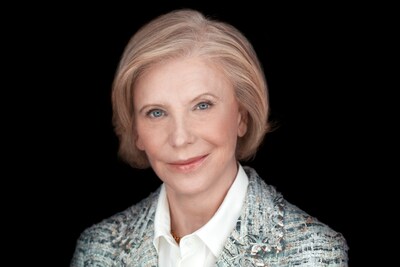
NEW YORK, May 6, 2026 /PRNewswire/ — The Vilcek Foundation mourns the passing of its beloved cofounder, Marica Vilcek, née Gerháth. A lifelong champion of immigrant contributions to the arts and sciences in the United States, Vilcek died on March 23, 2026, at the age of 89, at her home in New York. She is survived by her husband, Jan Vilcek.
“Marica Vilcek led with conviction and selflessness,” says Rick Kinsel, president of the Vilcek Foundation. “Those of us who knew Marica well understand that the foundation we see today bears the unmistakable imprint of her vision. She was, in many ways, its rudder: steady, thoughtful, and quietly guiding its course. What makes the foundation extraordinary is not only what it does, it is the spirit behind it. Marica was that spirit.”
Born on October 13, 1936, in the village of Ivanka pri Dunaji, Czechoslovakia, Vilcek had a profoundly difficult childhood, disrupted by World War II and the Soviet-backed Communist coup d’état of Czechoslovakia in 1948. Amid the tumult of postwar Europe and the oppression of communism, Vilcek found validation and solace in her studies. She attended Comenius University, where she earned bachelor’s and master’s degrees in art history, and in 1959, was awarded a Candidate of Sciences degree in art history, the equivalent of a PhD.
Vilcek’s thoughtful appreciation and meticulous work earned the young art historian a prestigious appointment with the Slovak National Gallery as a curatorial assistant; she was soon promoted to assistant curator in the Department of Prints and Drawings, launching a career arc that would span six decades in curatorial work and arts administration.
In 1961, Marica met Jan Vilcek, the love of her life, through a mutual acquaintance at a party in Bratislava. Mutually motivated by a shared enthusiasm for research and helping others, they began a life together. Within nine months, they married in a civil ceremony with no family present.
Vilcek and her husband found their careers hampered by the censorship and oppression of the Communist Party. The chance to flee came in 1964, when they received permission to visit friends in Austria for the weekend. The pair used the opportunity to defect, obtaining U.S. refugee visas in West Germany. Jan was subsequently offered a faculty position in the Department of Microbiology at the New York University School of Medicine, and in February 1965, the Vilceks arrived in New York.
In the spring of 1965, Vilcek restarted her career in New York as a volunteer at the Brooklyn Museum Library. A few months later, she received an offer to work with The Metropolitan Museum of Art’s Thomas J. Watson Library. Her fluency in more than five languages (the accumulation of her childhood experiences during the war, her studies, and her journey to the United States) made her an asset, and she quickly rose to the challenges the role presented.
In the Watson Library, Vilcek began a 30-year career with The Metropolitan Museum of Art, eventually becoming the associate curator-in-charge of the Accessions and Catalogue Department. During her tenure, she worked on exhibitions with notable figures, including Diana Vreeland and former First Lady Jacqueline Kennedy Onassis, who, in 1975, personally wrote to Vilcek, praising her “magic wand and…generous spirit.” Passionate about the power of mentorship to empower young arts professionals, Vilcek steered the development of The Metropolitan Museum of Art’s world-renowned high school internship program, funding many of the early internships herself. It was at the museum, too, where she met Rick Kinsel, who would become her protogé and collaborator.
Immigrating to the United States enabled Vilcek and her husband to excel in their careers, achieving success beyond what they could have imagined in Bratislava. In 2000, they established the Vilcek Foundation to provide support and recognition to immigrant scientists and artists in the United States through grants, prizes, and programs. To date, the Vilcek Foundation has awarded over $17 million in prizes, grants, and contributions in support of its mission. Through their own philanthropy, Vilcek and her husband have given more than $330 million to leading institutions in the arts and sciences, including The Metropolitan Museum of Art, The Institute of Fine Arts at New York University, the New York University School of Medicine, and the New York Youth Symphony.
The success that Vilcek achieved in her career also enabled her to develop a world-class collection of art with her husband and the Vilcek Foundation; the collection, which includes seminal works by Christo, Marsden Hartley, Stuart Davis, and Isamu Noguchi, has served as the basis for the exhibitions, Marsden Hartley: Adventurer in the Arts and From New York to New Mexico: Masterworks of American Modernism from the Vilcek Foundation Collection. Devoted to ensuring accessibility in the arts, Vilcek established a practice of loaning works from the collection to art institutions around the globe, so that others can access, study, and enjoy these works.
Vilcek’s commitment to empowering emerging professionals in the arts and sciences fostered the development of the Vilcek Prizes for Creative Promise in 2009. These prizes are awarded to young immigrant professionals in the arts and sciences who have demonstrated exceptional achievement early in their careers. An open call for applications for the prizes is held annually, a testament to Vilcek’s democratic and philanthropic spirit.
“Marica had a remarkable ability to recognize potential in people,” said Kinsel, “and she believed deeply that talent should be nurtured wherever it appeared. That belief shaped the Vilcek Prizes in a fundamental way. She advocated strongly for recognizing younger artists and scientists, people who were still building their work and whose voices might otherwise go unheard. She knew that recognition could be transformative when it arrived at the right moment.”
In 2024, the foundation inaugurated a new prize in Vilcek’s name, The Marica Vilcek Prize in Art History. The prize recognizes curators, museum professionals, and leaders in the arts whose work is vital to the arts, but whose efforts often go unseen. In the inaugural year, three Marica Vilcek Prizes in Art History were awarded, each to an immigrant curator whose work had a profound impact on The Metropolitan Museum of Art.
Vilcek’s life and impact is extraordinary, and inspiring. In January 2026, her memoir, Giving and Receiving: Memoirs of an Immigrant Curator and Philanthropist, was published by Rodin Books. With coauthor Justin Spring, Vilcek details the intricacies of her experiences and the resilience, independence, and enduring belief in opportunity that guided her on her path. An audiobook version is now available on Audible, Spotify, and everywhere major audiobooks can be found.
In the wake of Vilcek’s passing, Kinsel and the staff of the foundation are determined to carry her vision forward in the foundation’s work. “From the beginning, Marica believed the foundation should aim higher than the ordinary patterns of philanthropy,” said Kinsel. “Her legacy lives in the people she encouraged, the paths she helped open, and the vision she quietly insisted we pursue.”
The Vilcek Foundation is a private operating foundation, a federally tax-exempt nonprofit organization under IRC Section 501(c)(3). To learn more, please visit vilcek.org.
Contact
Elizabeth Boylan
The Vilcek Foundation
212-472-2500
elizabeth.boylan@vilcek.org

 View original content to download multimedia:https://www.prnewswire.com/news-releases/vilcek-foundation-mourns-marica-vilcek-cofounder-art-historian-and-philanthropist-302764179.html
SOURCE The Vilcek Foundation