Air conditioning professionals in Brooklet, GA, discuss the benefits of ductless mini split systems.
Brooklet, United States – April 29, 2026 / Crowe’s Comfort Solutions /
Why Install a Ductless Mini Split Air Conditioner?
Ductless mini split air conditioners have earned a strong reputation among homeowners who want reliable, efficient cooling without the complexity and limitations that come with traditional central air systems. Rather than relying on a network of air ducts to distribute conditioned air throughout the home, mini splits deliver cooled air directly into each room through sleek, wall-mounted indoor units paired with a compact outdoor compressor. The advantages that follow from that straightforward design, from energy savings to installation flexibility to personalized comfort control, make ductless mini split installation one of the most practical cooling investments available to homeowners today.
Lower Energy Bills
 Energy efficiency is one of the defining strengths of ductless mini split systems, and it shows up most noticeably in the form of reduced monthly electricity bills compared to what a conventional central air conditioner typically demands. Central air systems push cooled air through long stretches of ductwork before it ever reaches the living spaces, and along that path, energy is lost through leaks, gaps, and poorly insulated duct walls that quietly drive up the cost of cooling without delivering any additional comfort. Ductless mini splits sidestep that inefficiency entirely by conditioning air directly within the space being cooled, so every unit of electricity consumed translates into actual cooling rather than energy lost in transit.
The efficiency advantage of ductless systems is also reflected in the high SEER ratings that modern mini split units carry, which measure how much cooling output a system produces for every unit of electricity it consumes over the course of a cooling season. Many ductless models feature inverter-driven compressor technology that continuously adjusts the system’s output to match the actual cooling demand in the space rather than switching fully on and off in repeated cycles the way older systems do. That variable operation keeps the system running at peak efficiency throughout the day, consuming only the energy the situation requires and reducing the strain that constant cycling places on the equipment.
Over a full summer cooling season, those compounding efficiencies add up in a way that homeowners notice directly on utility statements month after month. A system that eliminates duct losses, operates at a high SEER rating, and adjusts its output dynamically is fundamentally better equipped to cool a home affordably than a conventional system running through aging or leaky ductwork. For homeowners who have accepted high summer energy bills as an unavoidable seasonal expense, switching to a ductless mini split often reframes that assumption in a meaningful and financially rewarding way.
Easier Installation and Flexibility
Installing a ductless mini split system is a significantly less disruptive process than a central air conditioning installation, largely because the absence of ductwork removes the most labor-intensive and invasive part of the project entirely. A traditional central air installation in a home that lacks existing ductwork requires cutting into walls and ceilings, routing ducts through framing cavities, and ensuring that the airflow design delivers balanced comfort throughout every room, a process that can stretch across days and involve considerable construction activity. A ductless installation, by contrast, typically requires only mounting the indoor air handler, positioning the outdoor unit, and connecting the two through a small conduit opening in the wall, making the process faster, cleaner, and far less intrusive for the household.
That simplified installation process translates directly into greater flexibility about where and how ductless systems can be used, opening up cooling options for spaces that a central air system simply could not serve without major renovation work. Older homes built before central air conditioning became standard often lack the wall cavities, attic space, or structural provisions needed to accommodate a full duct system, and retrofitting one into those homes can be prohibitively expensive and structurally complicated. Ductless mini splits make modern, efficient air conditioning accessible in those homes without requiring a single duct to be installed, preserving the structure and character of the building while bringing indoor comfort into the present.
Room additions, converted garages, sunrooms, and detached accessory structures present a similar challenge, as extending an existing duct system to reach a newly added or separate space is often impractical from both a cost and engineering standpoint. Running new ducts out to an addition requires verifying that the central system has sufficient capacity for the increased load and designing a duct route that may involve significant construction in finished spaces. A dedicated ductless unit in the new space resolves that challenge independently, providing efficient, reliable cooling precisely where it is needed without placing any additional demand on the main HVAC system.
Zoning and Customization
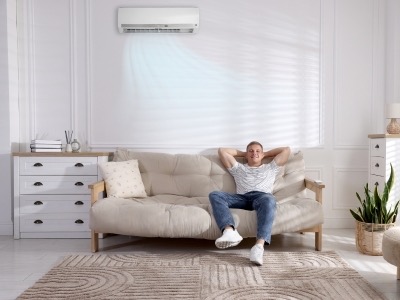 One of the most appreciated features of ductless mini split systems is the ability to create independent temperature zones throughout the home, giving each room or area its own thermostat setting rather than forcing the entire household to share a single temperature controlled from one central location. In a home cooled by a traditional central air system, the thermostat reads the temperature in one location and conditions the entire house based on that single reading, which often means some rooms are too cold while others remain uncomfortably warm. Multi-zone ductless systems eliminate that compromise by allowing each indoor air handler to operate at its own set temperature, so every occupant in every room can experience the comfort level that suits the space and the person using it.
The efficiency gains from zoned cooling go beyond personal comfort and extend into measurable energy savings by allowing conditioned air to be directed precisely where it is actually needed at any given time. Unoccupied bedrooms, rarely used guest spaces, and rooms that stay naturally cool due to shade or northern exposure do not need to be cooled to the same degree as sun-exposed living areas or upper-floor rooms that accumulate heat throughout the day. Ductless zoning makes that kind of targeted, demand-based cooling possible without any additional equipment, allowing the system to work smarter and consume less energy than a central system conditioning the entire home uniformly.
The customization that comes with ductless zoning also contributes to the long-term health and longevity of the equipment itself, because a system that runs only as hard as the actual cooling demand requires less wear over time than one cycling on and off repeatedly to maintain a whole-home temperature setpoint. Reduced runtime means less mechanical stress on the compressor and air handlers, fewer maintenance intervals driven by excessive wear, and a longer overall service life that protects the investment made at installation. For homeowners who want a cooling solution that balances daily comfort, operating efficiency, and long-term reliability in one well-designed package, ductless mini splits offer a compelling answer that continues to deliver value season after season.
About Crowe’s Comfort Solutions
Crowe’s Comfort Solutions is a heating and cooling professional company serving Brooklet, GA, and beyond. They offer flat-rate pricing, emergency services, and the latest technology. Call them today for ductless mini split installation in Brooklet, GA.


Contact Information:
Crowe’s Comfort Solutions
10559 Hwy 80 East
Brooklet, GA 30415
United States
Kody Crowe
(912) 823-4779
https://crowescomfort.com/